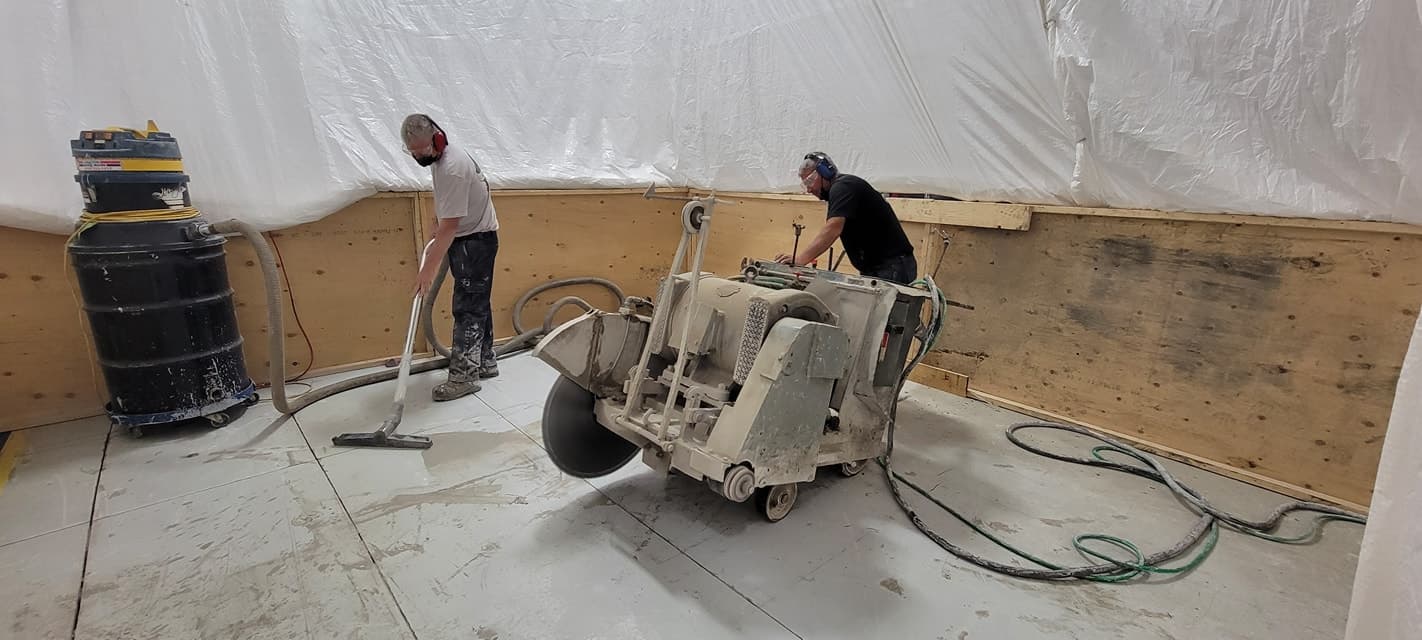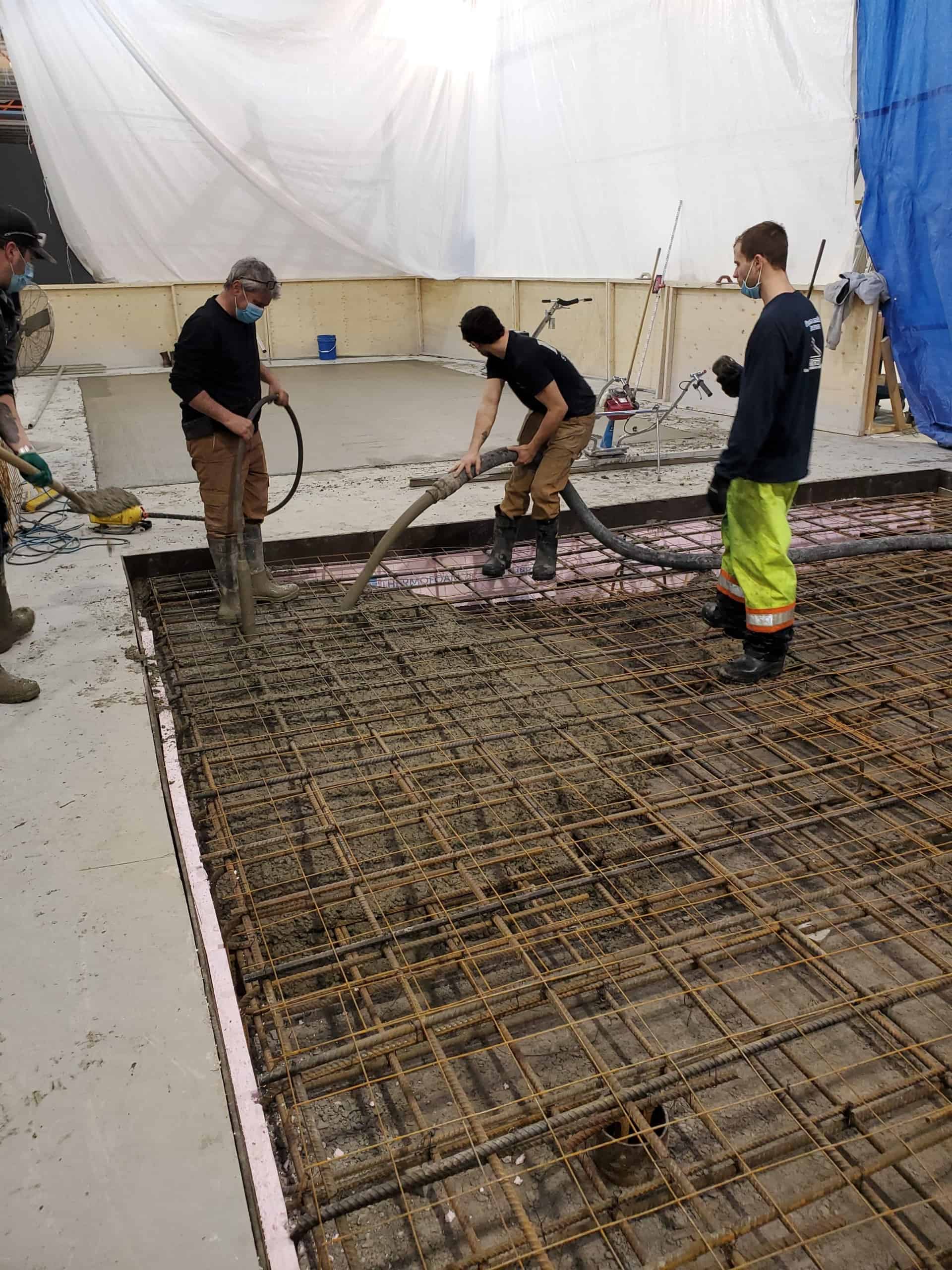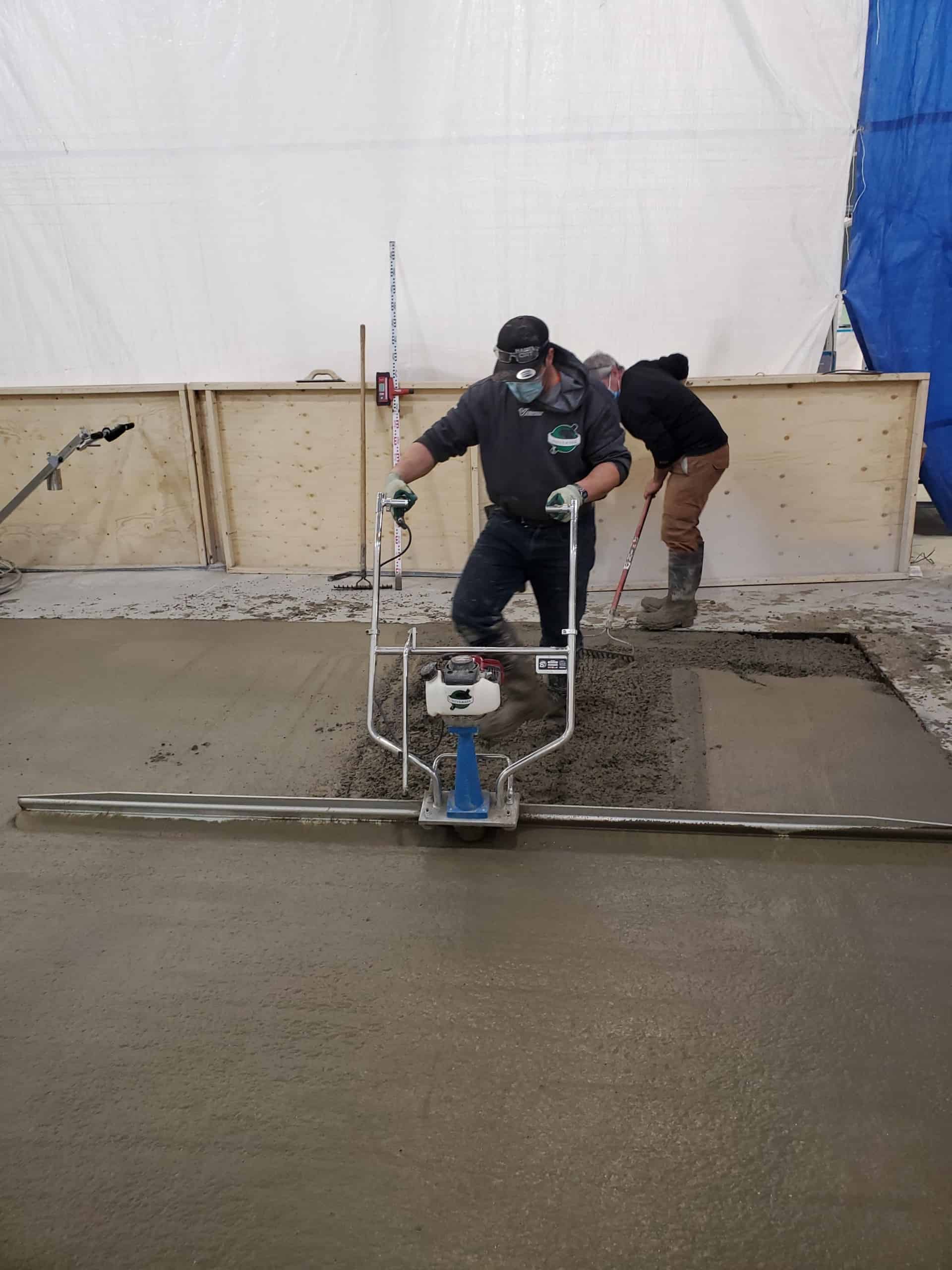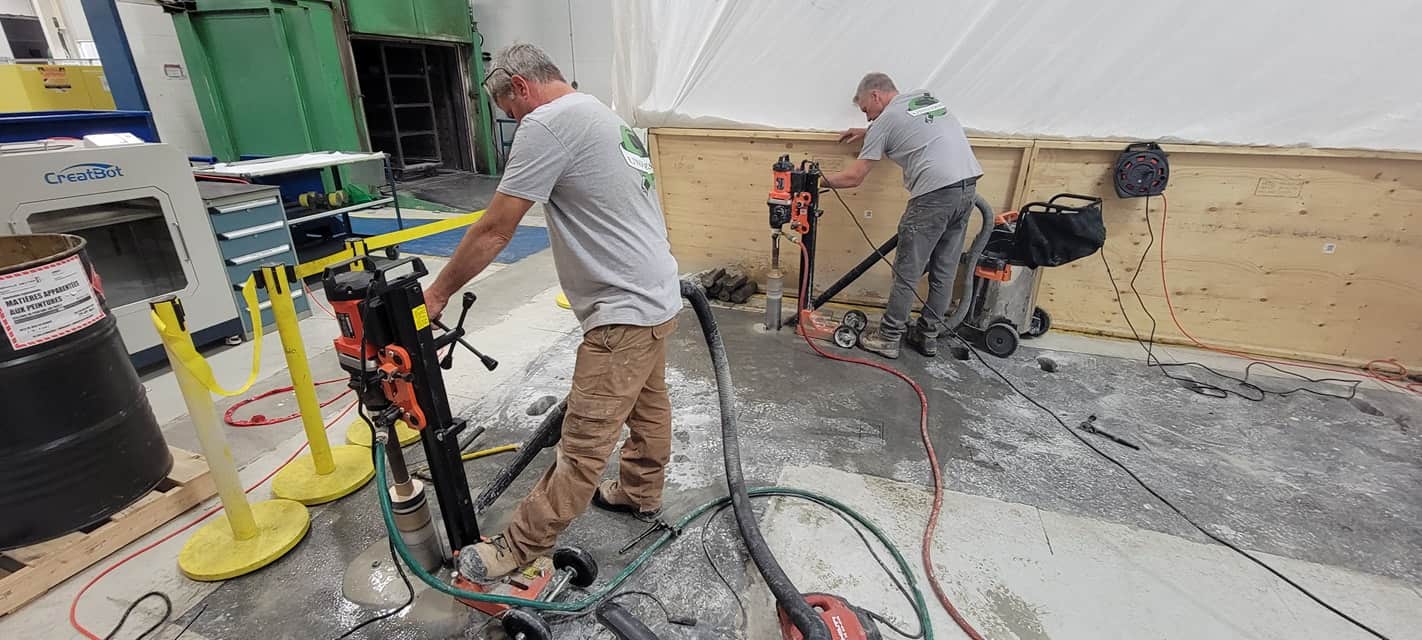
Reinforced Concrete Machine foundations are a specialized type of concrete construction used to support industrial equipment. Unlike standard slabs or structural elements, machine foundations are designed to manage weight, vibration, and operational forces generated by machinery during use.
Proper concrete machine foundation construction helps protect equipment, maintain alignment, and reduce long-term stress on surrounding structures.
Les Services de Béton Universel Ltée provides machine foundation construction services for industrial and commercial facilities throughout Greater Montreal, working with engineers and equipment suppliers to meet site-specific requirements.
What Is a Reinforced Concrete Machine Foundation
A machine foundation is a reinforced concrete base designed to support equipment such as:
- Industrial presses
- Pumps and compressors
- Manufacturing machinery
- Mechanical systems
- Specialized production equipment
These foundations are built to handle static loads from equipment weight as well as dynamic loads created by vibration, rotation, or impact during operation.
Machine foundations differ from typical floor slabs in both design and performance expectations. They are often thicker, more heavily reinforced, and isolated from surrounding structures when required.
Why Reinforced Concrete Machine Foundations Require Specialized Construction
Industrial equipment can generate forces that standard concrete slabs are not designed to handle. These forces may affect accuracy, performance, and service life if not properly managed.
Key factors addressed in machine foundation construction include:
- Equipment weight and load distribution
- Operating speed and vibration frequency
- Start-up and shutdown forces
- Interaction with surrounding structural elements
- Soil conditions beneath the foundation
According to the American Concrete Institute, foundations supporting machinery must be designed to limit vibration amplitudes and maintain equipment stability over time¹.
Load and Vibration Considerations
Machine foundations must support both static and dynamic loads.
Static loads include the weight of the equipment itself and any associated components. Dynamic loads are generated during operation and may include cyclic forces, impacts, or rotational movement.
Engineering guidelines often require machine foundations to weigh two to five times the weight of the supported equipment to help control vibration and maintain stability. This ratio varies depending on machine type, speed, and operating conditions.
By increasing mass and stiffness, the foundation reduces vibration transmission to the surrounding structure.
Foundation Types Used for Industrial Equipment
Several concrete foundation configurations are used depending on equipment requirements and site conditions.
Common types include:
- Block foundations – massive concrete blocks used for heavy equipment
- Slab foundations – thickened slabs integrated into floor systems
- Isolated foundations – separated from surrounding slabs to reduce vibration transfer
- Pile-supported foundations – used where soil conditions require deeper support
Selecting the correct foundation type helps manage loads and operational forces efficiently.
Les Services de Béton Universel Ltée works with engineers to construct machine foundations that align with both equipment specifications and site constraints.
Soil Conditions and Sub-base Preparation
Soil conditions play a critical role in machine foundation performance. Weak or uneven soil can lead to settlement, misalignment, or vibration amplification.
Proper preparation may include:
- Soil investigation and testing
- Compacted granular subbase installation
- Use of engineered fill materials
- Drainage measures to control moisture
Foundation performance depends heavily on soil stiffness and uniform support.
Reinforcing Steel and Anchoring Systems
Reinforced Concrete Machine foundations typically include reinforcing steel to control cracking and improve load distribution. In addition, anchoring systems are used to secure equipment to the foundation.
Key elements include:
- Reinforcing bars arranged to resist bending and shear
- Anchor bolts cast into the foundation
- Sleeves or templates for precise bolt placement
- Grouting beneath equipment bases
Accurate placement of anchor bolts is critical for proper equipment alignment and operation.
Concrete Strength and Material Selection
Concrete used for machine foundations is often specified with higher strength requirements to support heavy loads and reduce deformation.
While strength requirements vary, industrial foundations commonly use concrete with compressive strengths exceeding 30 MPa, depending on design requirements and exposure conditions².
Material selection also considers:
- Shrinkage control
- Durability under operational conditions
- Compatibility with grouting materials
CSA standards govern concrete materials and construction practices used in Canadian industrial projects³.
Construction Sequence for Machine Foundations
Reinforced Concrete Machine foundation construction typically follows a structured sequence to ensure accuracy and performance:
- Site layout and excavation
- Subbase preparation and compaction
- Formwork installation
- Reinforcement placement
- Anchor bolt positioning
- Concrete placement and finishing
- Curing and strength development
- Equipment installation and grouting
Each step affects final performance. Errors in layout or anchoring can lead to costly corrections later.
Coordination With Equipment Installation
Machine foundations are often constructed before equipment arrives on site. This requires close coordination with equipment suppliers to confirm:
- Equipment dimensions and loads
- Anchor bolt patterns
- Baseplate requirements
- Alignment tolerances
Les Services de Béton Universel Ltée coordinates foundation construction with equipment installation schedules to minimize delays and ensure readiness.
Scale of Concrete Use in Industrial Foundations
Machine foundations represent a small but important segment of industrial concrete construction.
Globally, cement production reached approximately 4.2 billion tonnes in 2020, supporting widespread use of concrete in industrial facilities⁴. In Canada, Statistics Canada reports over 13 million metric tonnes of cement produced annually, reflecting ongoing demand for industrial and infrastructure construction⁵.
Repair, Modification, and Upgrades
Existing machine foundations may require modification when equipment is replaced or upgraded. This can involve:
- Enlarging foundation dimensions
- Adding reinforcement
- Relocating anchor bolts
- Improving vibration control
Evaluating existing foundations helps determine whether repairs or upgrades are needed to support new equipment safely.
When Machine Foundation Construction Is Required
Machine foundation construction is typically required when:
- New equipment is installed
- Existing slabs cannot support operational loads
- Vibration control is necessary
- Equipment alignment is critical
- Production layouts are modified
Addressing foundation requirements early helps avoid operational issues later.
Machine Foundations as Part of Industrial Infrastructure
Machine foundations are often constructed alongside other concrete work such as:
- Structural slabs
- Trenches and pits
- Equipment pads
- Industrial flooring systems
Coordinating these elements helps maintain consistent elevations, load paths, and durability across the facility.
Les Services de Béton Universel Ltée provides machine foundation construction as part of comprehensive industrial concrete projects across Montreal, Laval, and the South Shore.
Key Takeaways
- Machine foundations support heavy industrial equipment
- Design must address weight, vibration, and soil conditions
- Foundations often weigh multiple times more than the equipment they support
- Proper anchoring and reinforcement are critical
- Concrete is a standard material for industrial equipment foundations
Machine foundation construction plays a key role in maintaining stable, efficient, and reliable industrial operations.
Resources
¹ American Concrete Institute – Foundations for Dynamic Equipment
https://www.concrete.org/topicsinconcrete/topicdetail/foundations%20for%20dynamic%20equipment
² ASTM International – Concrete Strength and Testing
https://store.astm.org/c0039_c0039m-21.html
³ CSA Group – CSA A23.1 / A23.2 Concrete Materials and Methods
https://www.csagroup.org/store/product/CSA%20A23.1%3A19-CSA%20A23.2%3A19/
⁴ Global Cement and Concrete Association – Cement and concrete production
https://gccassociation.org/concretefuture/cement-concrete-around-the-world/
⁵ Statistics Canada – Cement manufacturing and production
https://www150.statcan.gc.ca/t1/tbl1/en/tv.action?pid=1610007701