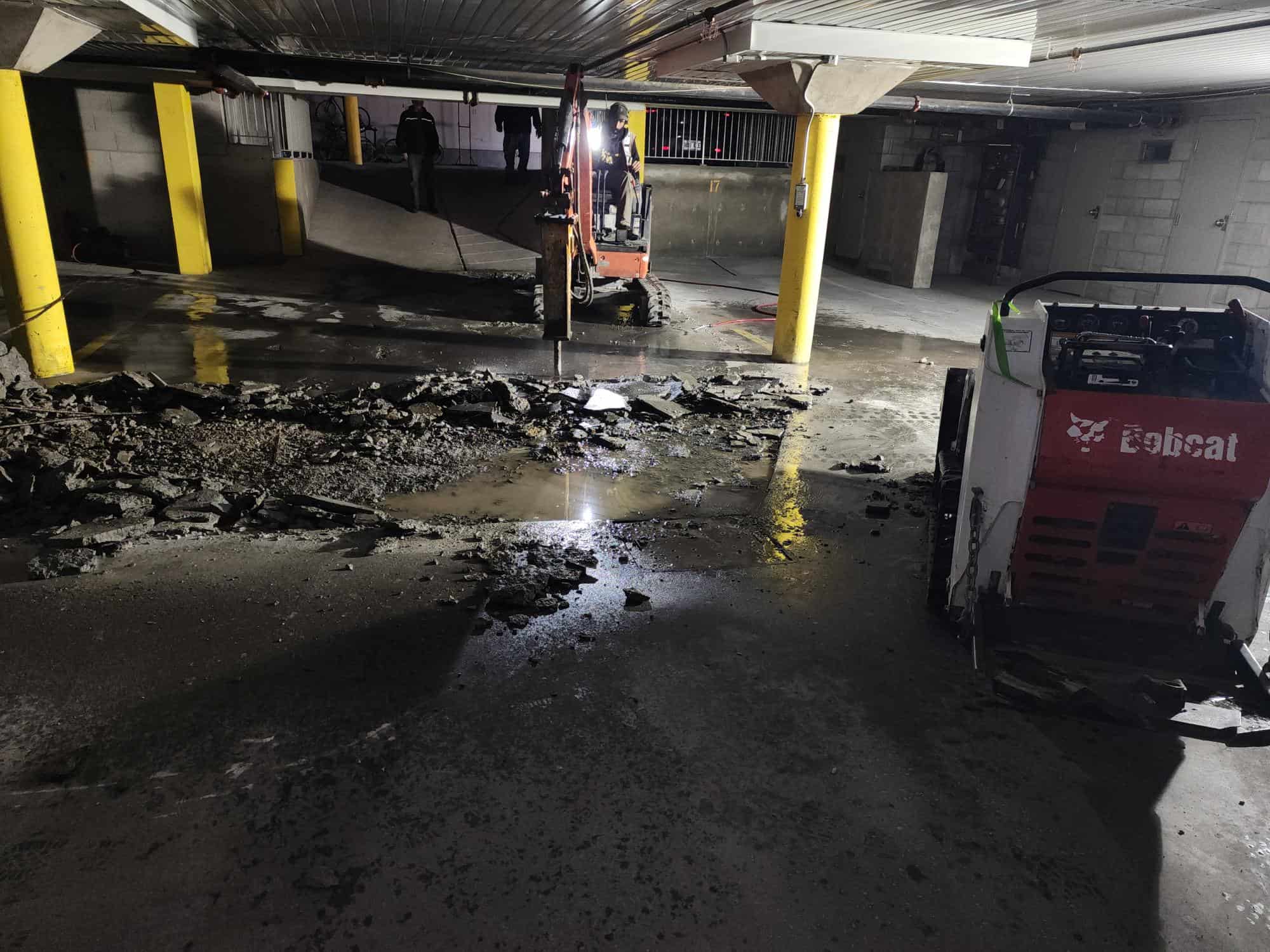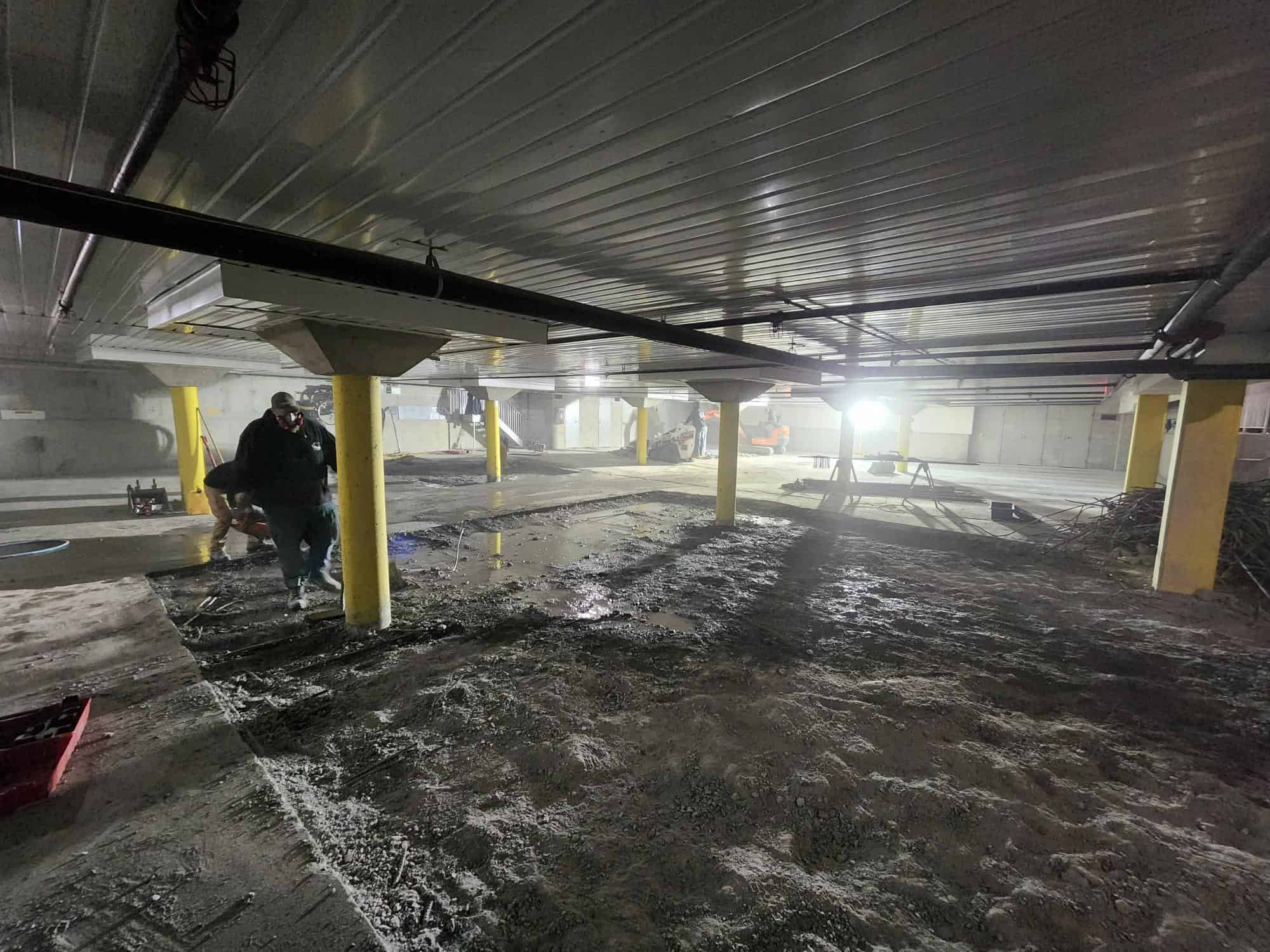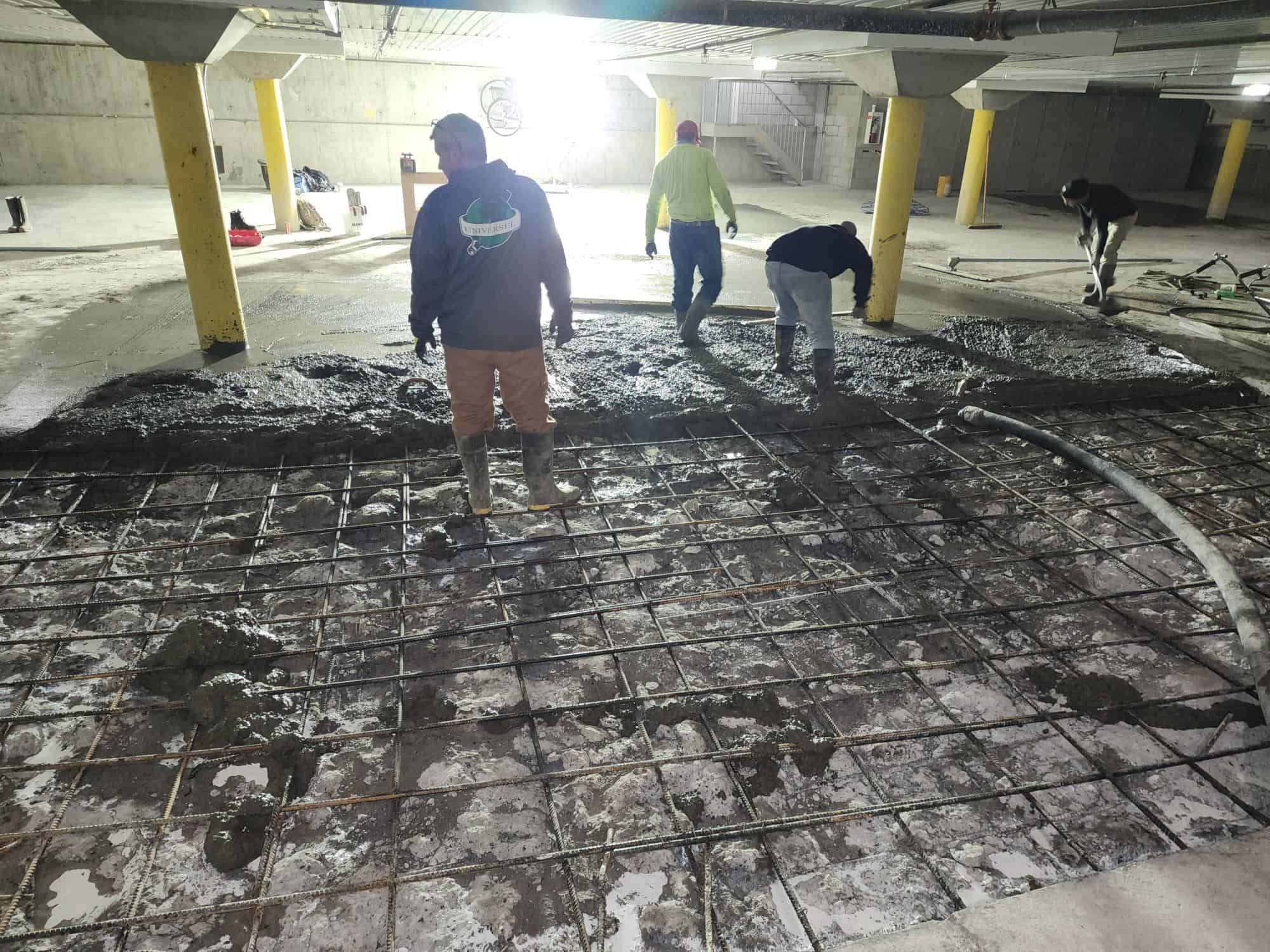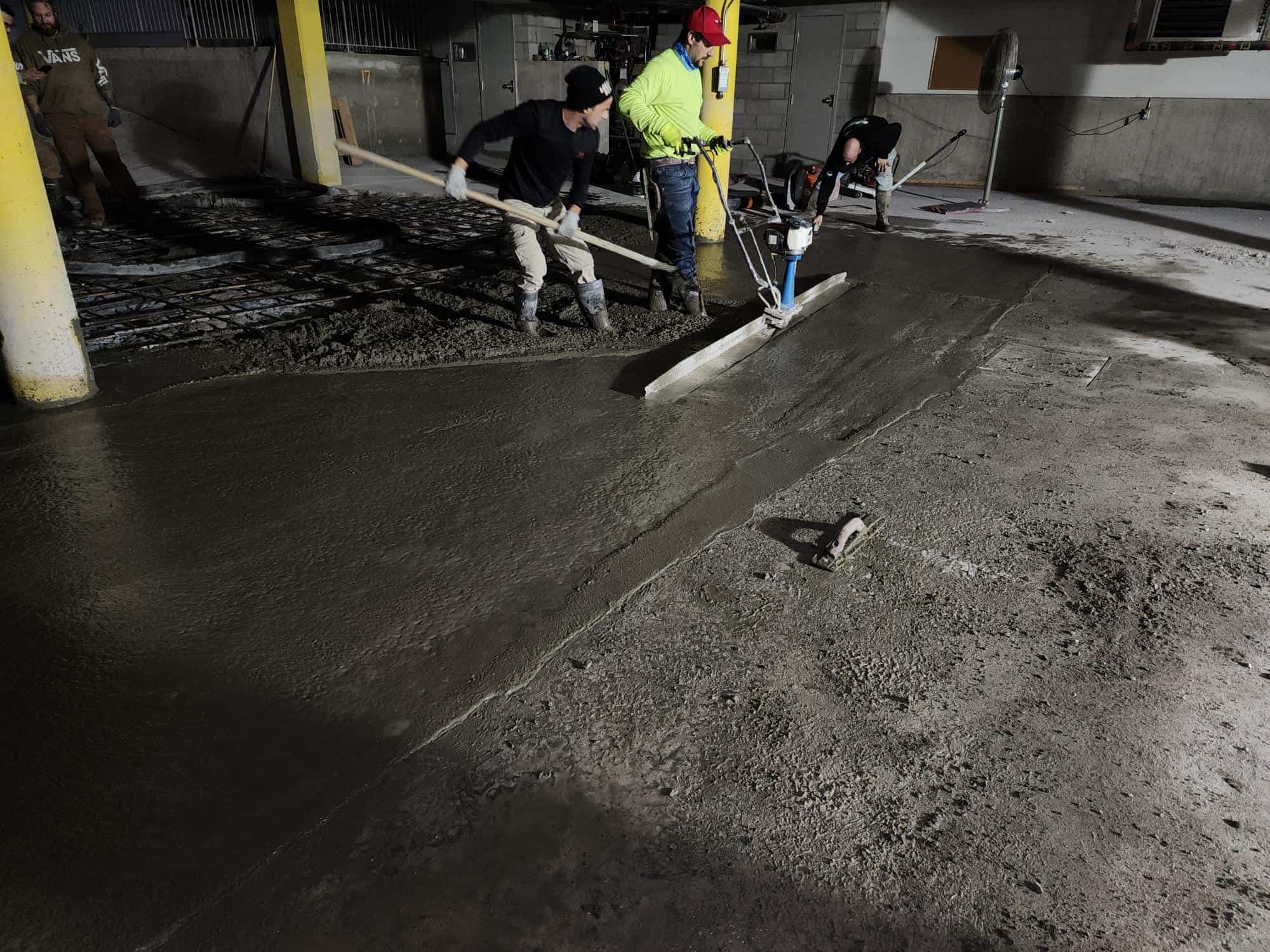
Concrete foundations support the entire structure of a building. They transfer loads from walls, columns, and slabs into the ground and help keep the building stable over time. In commercial and industrial construction, foundations are designed to support heavy loads while resisting movement caused by soil conditions, moisture, and long-term use.
When a concrete foundation deteriorates, the impact can extend throughout the structure. Cracking, settlement, or loss of material can affect floors, walls, and structural alignment.
Concrete foundation repair focuses on restoring load transfer, stability, and durability while maintaining the safety and performance of the building.
Les Services de Béton Universel Ltée provides concrete foundation repair services for commercial and industrial properties throughout Greater Montreal, working in below-grade and confined environments.
The Role of Concrete Foundations in Commercial Buildings
Concrete foundations form the base of commercial and industrial structures. Depending on the building type and soil conditions, foundations may include:
- Spread footings
- Strip footings
- Foundation walls
- Mat or raft foundations
- Pile-supported foundations
Foundations distribute loads over a larger area of soil to reduce pressure and control settlement. In commercial buildings, foundations often support higher loads than residential construction due to equipment, storage, and traffic.
Because foundations are largely hidden from view, early signs of deterioration may go unnoticed unless regular inspections are performed.
Common Causes of Concrete Foundation Damage
Concrete foundations can deteriorate for a variety of reasons. Many of these causes are related to soil conditions and moisture exposure.
Common causes include:
- Soil settlement or movement
- Water infiltration around foundation walls
- Poor drainage near the building
- Cracking due to shrinkage or movement
- Corrosion of reinforcing steel
- Long-term exposure to moisture
Changes in building use can also increase foundation loads beyond original design assumptions, contributing to cracking or settlement.
The International Concrete Repair Institute identifies moisture-related deterioration as a frequent contributor to foundation repair projects¹.
Soil Conditions and Foundation Performance
Soil conditions play a major role in how foundations perform over time. Uneven or weak soil can lead to differential settlement, where parts of the foundation move more than others.
Key soil-related factors include:
- Soil type and bearing capacity
- Moisture content and drainage
- Presence of fill or disturbed soil
- Seasonal changes in soil volume
The National Research Council of Canada notes that uniform soil support is critical to maintaining foundation stability³.
Foundation Cracking and Movement
Cracking in concrete foundations is common, but not all cracks indicate a structural problem.
Foundation cracks may result from:
- Normal concrete shrinkage
- Temperature-related movement
- Soil settlement
- Lateral pressure from soil and water
Cracks that widen over time, allow water infiltration, or affect load-bearing elements may require repair.
Evaluating crack location, width, and pattern helps determine whether repairs are needed.
Water Infiltration and Drainage Issues
Water is one of the most significant factors affecting foundation durability. Poor drainage can allow water to accumulate against foundation walls, increasing pressure and moisture exposure.
Common water-related issues include:
- Inadequate surface drainage
- Blocked or failing drainage systems
- Water penetration through cracks or joints
- Moisture accumulation around footings
Managing water around foundations helps reduce long-term deterioration and supports repair performance.
Environmental Exposure in Quebec Foundations
Foundations in the Greater Montreal area are exposed to seasonal conditions that affect soil and concrete performance.
Quebec applies approximately 1.5 million tonnes of de-icing salt each winter, much of which enters the ground through runoff and melting snow². Chlorides from these salts can migrate through soil and affect reinforced concrete foundations.
Over time, this exposure can contribute to reinforcement corrosion and concrete deterioration in below-grade structures.
Scale of Foundation Construction and Repair
Concrete foundations are a standard part of commercial construction worldwide.
- Global cement production reached approximately 4.2 billion tonnes in 2020, supporting widespread use of concrete foundations⁴.
- In Canada, over 13 million metric tonnes of cement are produced annually, reflecting ongoing construction and foundation work⁵.
These figures show why foundation repair is a routine part of maintaining commercial and industrial buildings.
Evaluation of Concrete Foundation Condition
Before foundation repairs begin, a detailed evaluation is typically performed.
Evaluation methods may include:
- Visual inspection of foundation walls and footings
- Measurement of crack width and movement
- Assessment of moisture and drainage conditions
- Review of building loads and structural drawings
Understanding the cause of foundation issues helps ensure repairs address underlying problems.
Les Services de Béton Universel Ltée works with engineers to assess foundation conditions and develop appropriate repair approaches.
Concrete Foundation Repair Methods
Foundation repair methods depend on the type and severity of damage.
Common approaches include:
| Condition | Repair Focus |
|---|---|
| Cracking | Crack repair and sealing |
| Spalling | Removal of damaged concrete and patch repair |
| Settlement | Structural stabilization or underpinning |
| Water infiltration | Surface repair and drainage improvements |
Proper surface preparation and material selection are critical for durable repairs.
ASTM standards provide guidance on materials and testing used in concrete repair work⁶.
Repair Versus Replacement of Foundations
In most commercial buildings, foundation repair is preferred over full replacement. Replacement can involve extensive excavation, demolition, and disruption.
Repair allows targeted improvements while preserving the existing structure. In some cases, partial reconstruction or strengthening may be required.
The Engineering Institute of Canada recognizes foundation rehabilitation as a standard approach to extending building service life⁷.
When Concrete Foundation Repair Is Needed
Concrete foundations should be evaluated when:
- Cracks increase in size or number
- Water infiltration becomes visible
- Floors or walls show signs of movement
- Drainage conditions change
- Building loads increase
Early intervention often reduces repair scope and long-term impact.
In Quebec, foundation repair work must comply with provincial construction requirements overseen by the Régie du bâtiment du Québec⁸.
Concrete Foundation Repair as Part of Structural Maintenance
Foundation repair is often coordinated with other structural work such as:
- Concrete slab repair
- Beam and column repairs
- Drainage and waterproofing improvements
- Excavation and site work
Les Services de Béton Universel Ltée integrates foundation repair into broader structural concrete maintenance projects across Montreal, Laval, and the South Shore.
Key Takeaways
- Concrete foundations support the entire building structure
- Soil and moisture conditions play a major role in performance
- Cracking and settlement are common foundation issues
- Repair often restores stability without full replacement
- Early evaluation supports long-term durability
Concrete foundation repair plays an essential role in maintaining safe and functional commercial and industrial buildings throughout the Greater Montreal area.
Resources
¹ International Concrete Repair Institute – Concrete Repair Guidance
https://www.icri.org/resources/icri-technical-publications/
² Gouvernement du Québec – De-icing salt use
https://www.environnement.gouv.qc.ca/eau/flrivlac/sels-dissous-en.htm
³ National Research Council Canada – Soil Support and Foundation Performance
https://nrc-publications.canada.ca/eng/view/object/?id=0eaf5772-237b-4eb1-ac8d-978b8df623d6
⁴ Global Cement and Concrete Association – Cement and concrete production
https://gccassociation.org/concretefuture/cement-concrete-around-the-world/
⁵ Statistics Canada – Cement manufacturing and production
https://www150.statcan.gc.ca/t1/tbl1/en/tv.action?pid=1610007701
⁶ ASTM International – Concrete Repair and Testing Standards
https://www.astm.org/standards/c881
⁷ Engineering Institute of Canada – Structural rehabilitation practice
⁸ Régie du bâtiment du Québec – Construction and foundation work requirements
https://www.rbq.gouv.qc.ca/en/