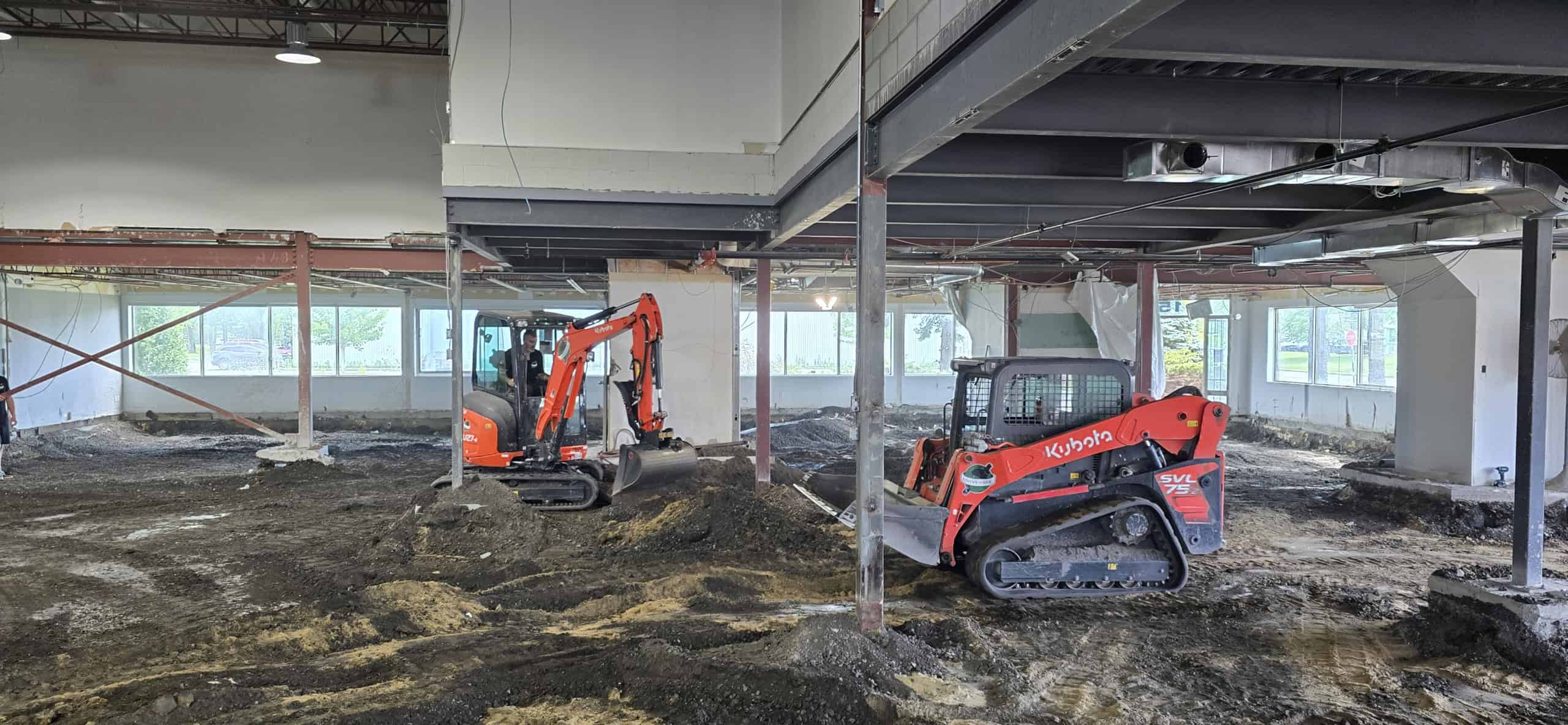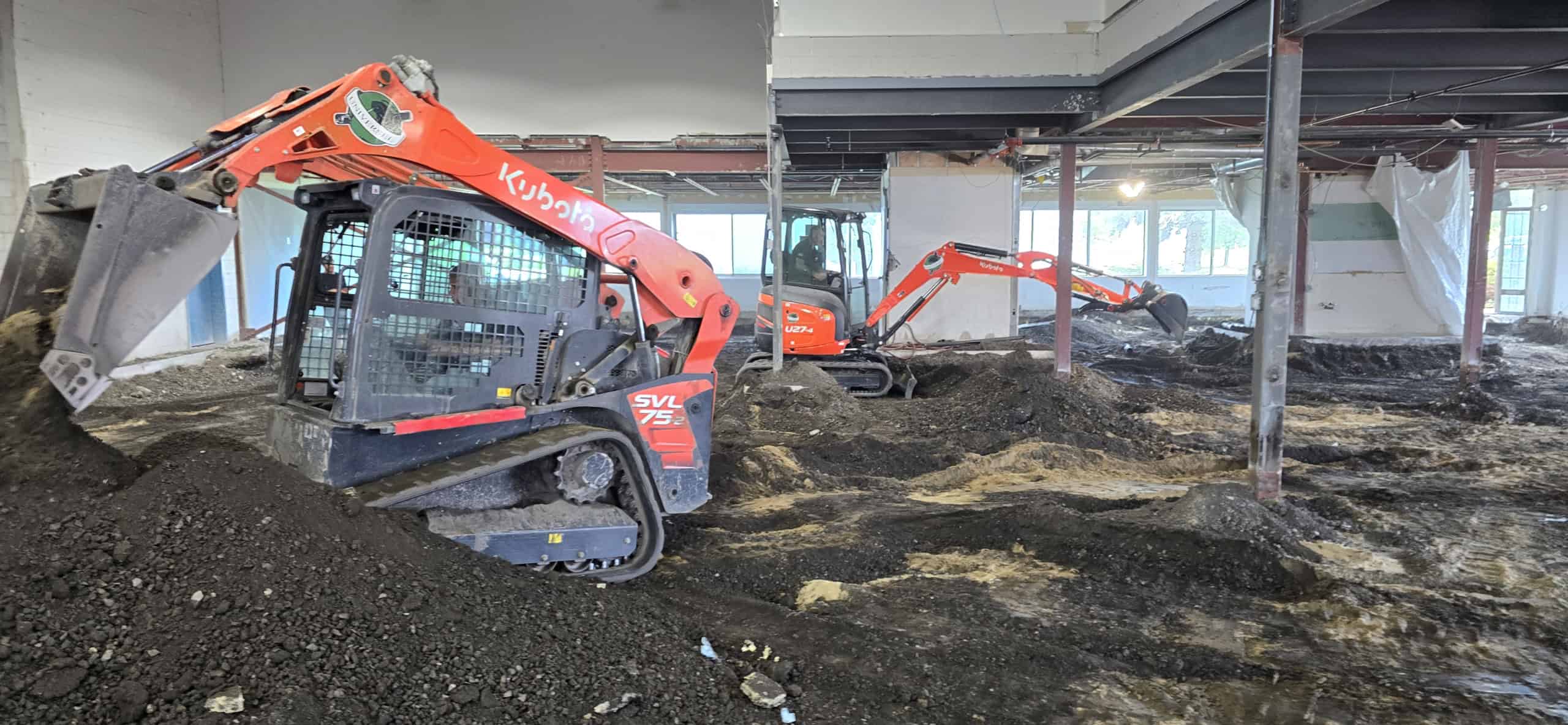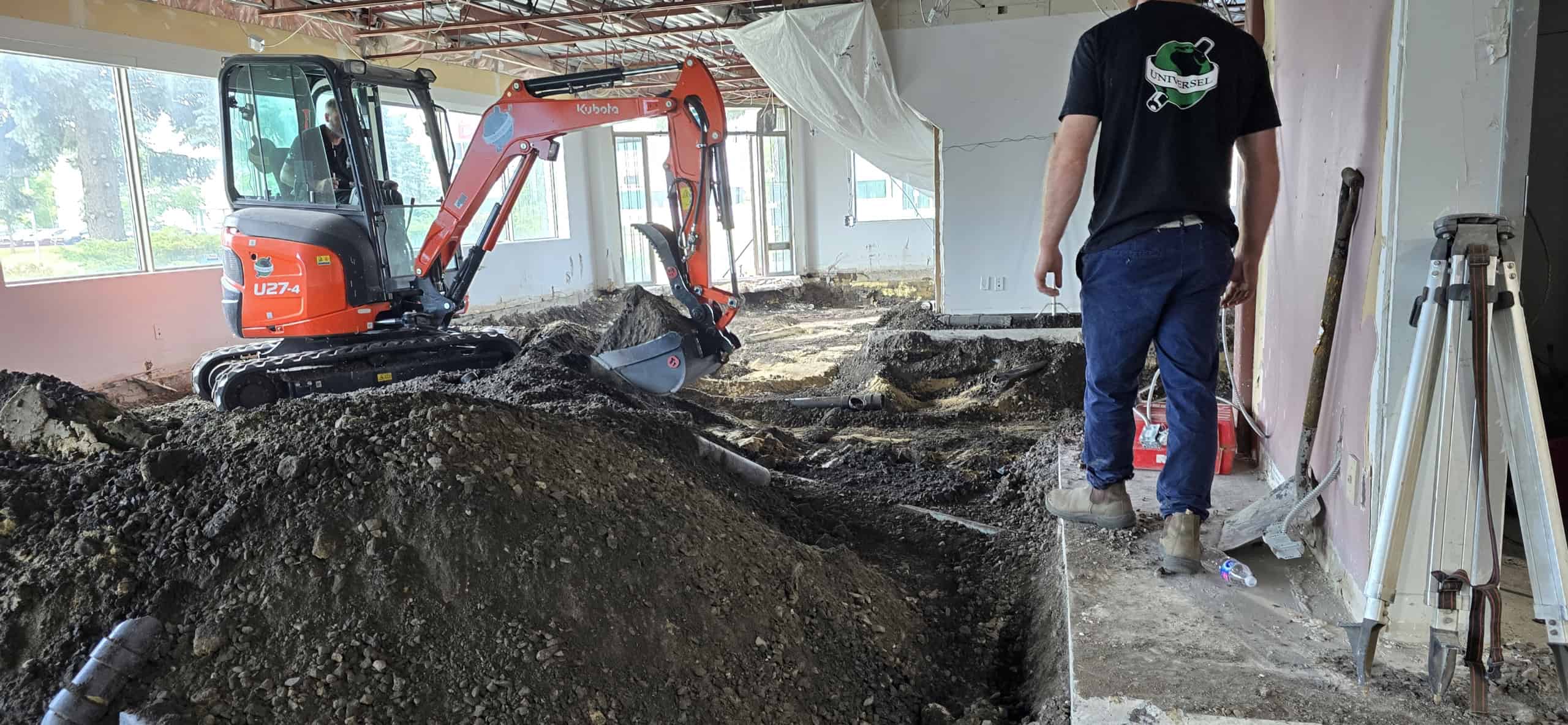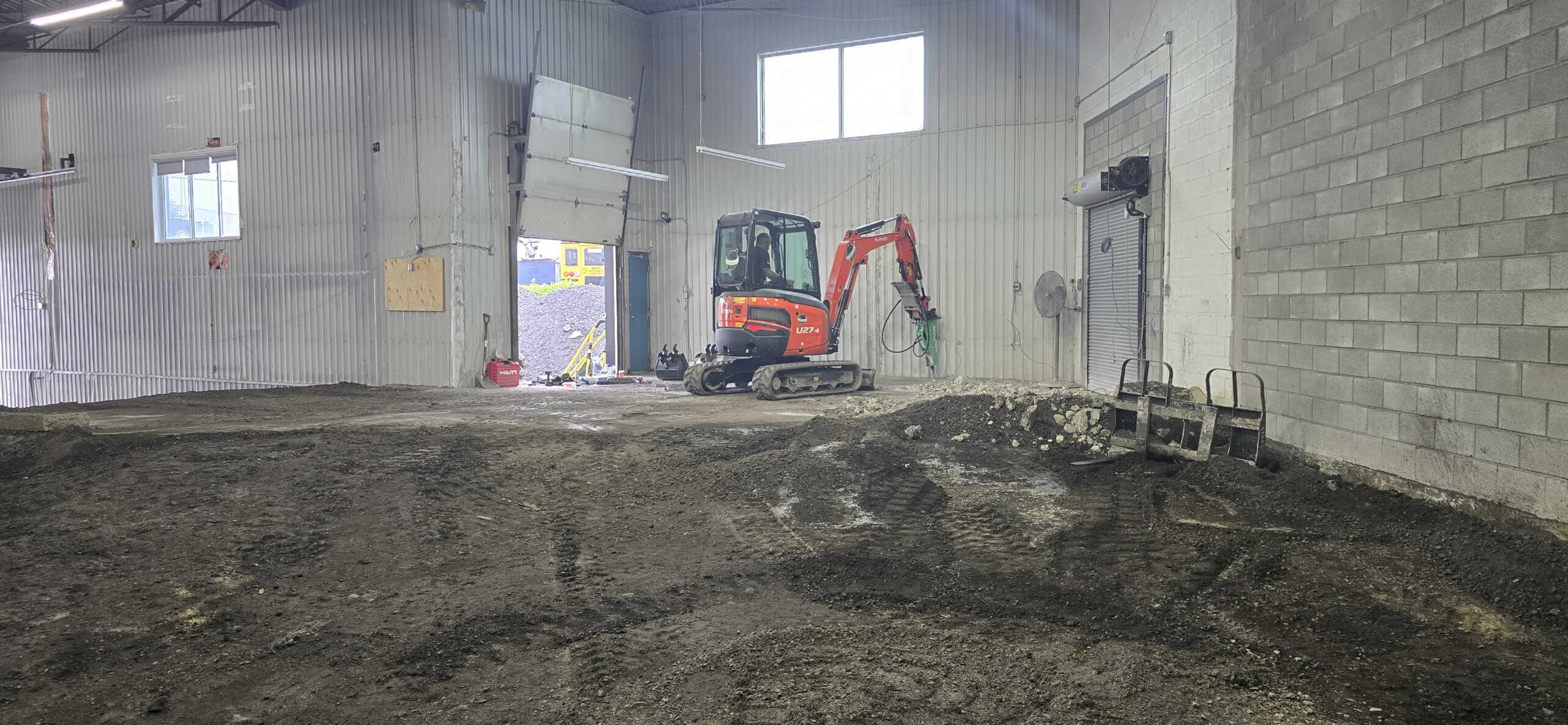
Mini excavation services are used to prepare sites for concrete construction, repair, and structural work. In commercial and industrial environments, excavation must be precise, controlled, and coordinated with existing structures, utilities, and operations.
Mini excavation supports a wide range of work, including foundation repairs, slab replacement, trench construction, and structural modifications.
Les Services de Béton Universel Ltée provides Mini excavation services for commercial and industrial projects throughout Greater Montreal, including work in confined areas, underground structures, and active facilities.
What Mini Excavation Services Involve
Mini excavation refers to the removal of soil, fill, or existing materials to allow for concrete work. Unlike large-scale earthmoving, concrete excavation is often targeted and controlled, focusing on specific areas where concrete elements are being installed, repaired, or modified.
Typical applications include:
- Excavation for concrete slab repairs or replacement
- Trenching for plumbing and drainage embedded in concrete
- Excavation for foundation repairs and underpinning
- Removal of material for concrete bases and pads
- Interior or underground excavation in parking structures
In many cases, excavation takes place near existing concrete elements that must remain intact.
Mini Excavation in Commercial and Industrial Settings
Commercial and industrial excavation presents challenges that are not usually found in residential projects. These sites often involve:
- Limited access or headroom
- Existing structural elements
- Active operations that must remain functional
- Coordination with utilities and services
- Strict safety and scheduling requirements
Mini excavation must be planned carefully to avoid undermining existing structures or disrupting building use.
Les Services de Béton Universel Ltée regularly performs excavation work in active commercial buildings and underground parking structures, coordinating excavation with concrete repair and construction activities.
Controlled Mini Excavation and Structural Protection
One of the primary goals of concrete excavation is protecting adjacent structures. Removing too much material or excavating in the wrong sequence can compromise stability.
Controlled excavation techniques include:
- Excavating in stages
- Maintaining temporary support where required
- Monitoring adjacent concrete elements
- Coordinating excavation depth and width
Soil support and excavation sequencing are key factors in maintaining foundation and structural performance during construction activities.
Excavation Depths and Dimensions
Concrete excavation projects vary widely in size. Depth and width depend on the type of concrete work being performed.
Common excavation ranges include:
- Shallow excavations of 300 mm to 600 mm for slab repairs
- Trenches exceeding 1 meter in depth for drainage or services
- Localized excavations around foundations and footings
- Interior excavations with restricted vertical clearance
Accurate layout and depth control help ensure that excavation supports the intended concrete work without unnecessary disturbance.
Mini Excavation and Tight-Access Work
Many concrete excavation projects require work in areas with limited access. This includes:
- Interior spaces
- Underground parking garages
- Narrow service corridors
- Areas near existing structures
In these situations, mini excavation equipment is often used. Compact excavators allow precise digging while minimizing disruption to surrounding areas.
Mini excavation is commonly used for:
- Trenching for utilities
- Localized slab removal
- Excavation near columns and walls
- Work in areas with low ceiling height
Using the right equipment helps maintain control and reduces the risk of damage.
Soil Conditions and Mini Excavation Planning
Soil conditions have a direct impact on excavation methods and safety. Excavation planning considers:
- Soil type and bearing capacity
- Moisture content
- Presence of fill or disturbed soil
- Proximity to foundations and slabs
Poor soil conditions may require additional support, staged excavation, or engineered solutions. Soil stiffness and uniform support play a major role in how excavations interact with existing foundations.
Coordination With Concrete Construction
Mini excavation is closely tied to the concrete work that follows. Excavation dimensions, shape, and preparation affect the quality of the finished concrete element.
Key coordination points include:
- Matching excavation size to formwork requirements
- Preparing a stable, compacted base
- Managing drainage and moisture
- Coordinating timing with concrete placement
Les Services de Béton Universel Ltée integrates excavation services with concrete construction to ensure continuity between site preparation and finished work.
Environmental Exposure and Site Conditions
In Quebec, excavation work often takes place in environments affected by seasonal weather and winter maintenance practices.
Provincial data shows that approximately 1.5 million tonnes of de-icing salt are used each winter in Quebec¹. This salt is carried into parking structures and service areas, where it can affect soil moisture and concrete exposure conditions.
Excavation planning must account for these conditions to reduce long-term impact on concrete elements.
Scale of Concrete and Mini Excavation Work
Mini excavation services are widely used because concrete is a dominant construction material.
- Global cement production reached approximately 4.2 billion tonnes in 2020, supporting widespread concrete construction worldwide².
- In Canada, over 13 million metric tonnes of cement are produced annually, reflecting ongoing commercial and industrial building activity³.
Safety and Compliance in Excavation Work
Concrete excavation must be performed in compliance with safety regulations, particularly when working near structures or in confined spaces.
Safety considerations include:
- Trench stability and collapse prevention
- Protection of workers and building occupants
- Utility identification and avoidance
- Safe access and egress
In Quebec, excavation and construction work must follow requirements overseen by the Régie du bâtiment du Québec and workplace safety authorities⁴.
When Mini Excavation Services Are Needed
Mini excavation services are typically required when:
- Concrete slabs or foundations need repair
- New concrete elements are being installed
- Trenches are required for embedded services
- Structural modifications are planned
- Drainage or waterproofing work is performed
Early planning helps ensure excavation supports the concrete work efficiently and safely.
Mini Excavation as Part of Broader Projects
Mini excavation is often performed alongside:
- Concrete sawing and removal
- Concrete drilling
- Structural concrete repairs
- Foundation and slab construction
Coordinating these services helps reduce delays and maintain consistent quality.
Les Services de Béton Universel Ltée provides concrete excavation services as part of comprehensive concrete repair and construction projects across Montreal, Laval, and the South Shore.
Key Takeaways
- Concrete excavation supports construction, repair, and structural work
- Controlled excavation protects existing structures
- Mini excavation is useful in tight-access environments
- Soil conditions affect excavation planning and safety
- Excavation is closely coordinated with concrete placement
Concrete excavation services play an important role in maintaining and upgrading commercial and industrial concrete structures throughout the Greater Montreal area.
Resources
¹ Gouvernement du Québec – De-icing salt use and environmental exposure
https://www.environnement.gouv.qc.ca/eau/flrivlac/sels-dissous-en.htm
² Global Cement and Concrete Association – Cement and concrete production
https://gccassociation.org/concretefuture/cement-concrete-around-the-world/
³ Statistics Canada – Cement manufacturing and production
https://www150.statcan.gc.ca/t1/tbl1/en/tv.action?pid=1610007701
⁴ Régie du bâtiment du Québec – Construction and excavation requirements
https://www.rbq.gouv.qc.ca/en/