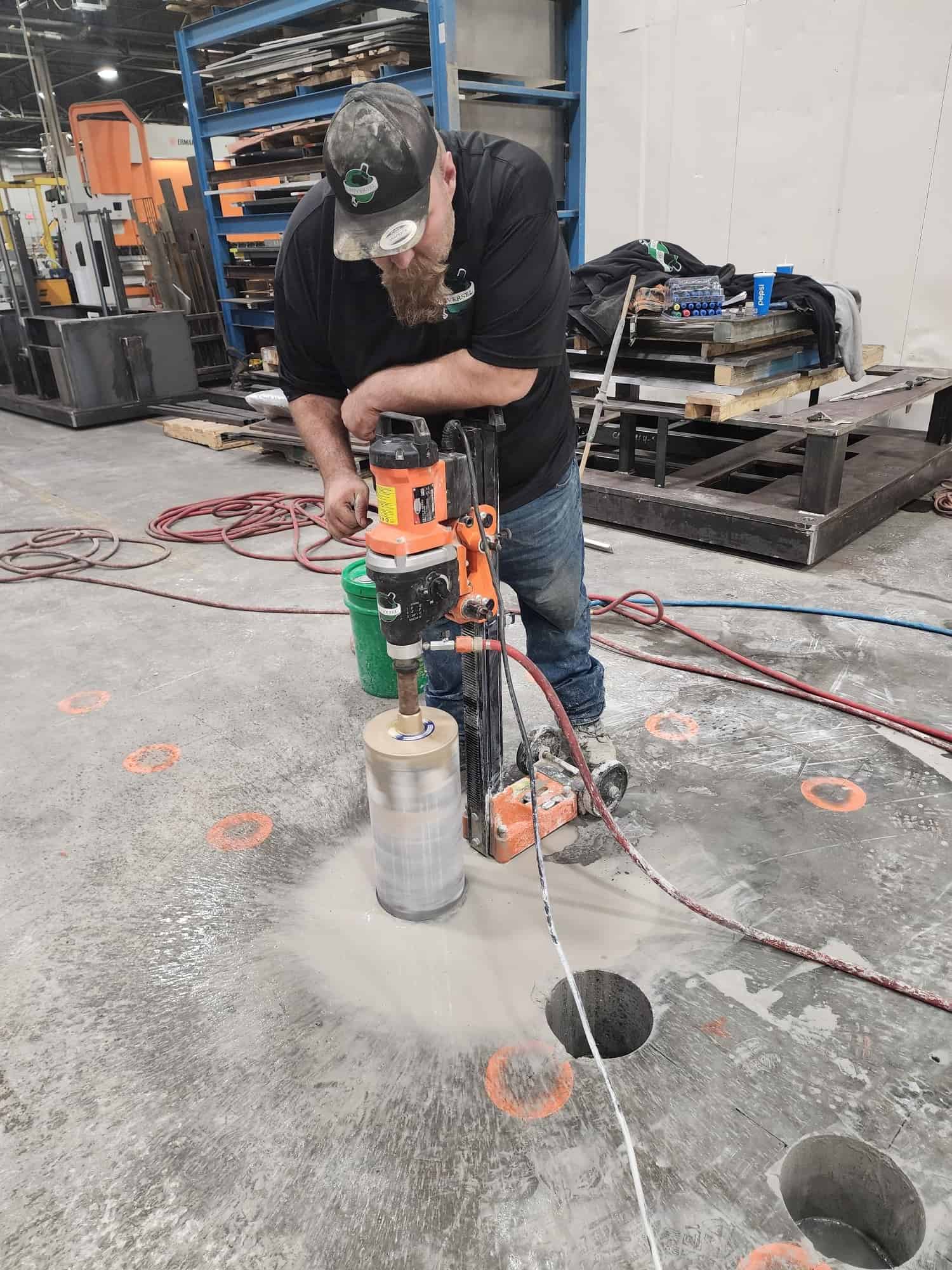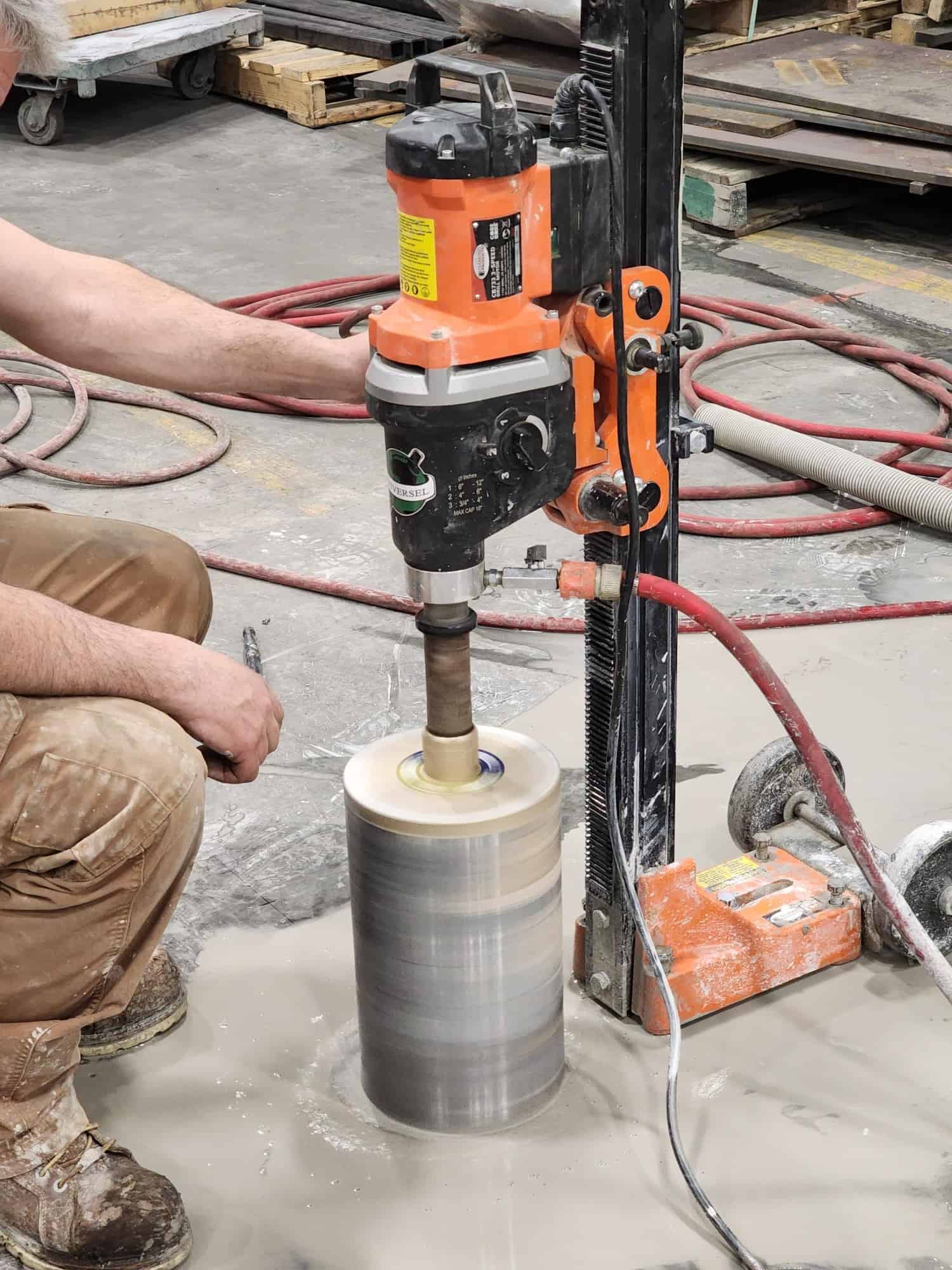
Concrete Core Drilling services are used to create precise openings in reinforced concrete for mechanical, electrical, plumbing, and structural applications. In commercial and industrial buildings, concrete core drilling must be performed accurately to avoid damaging surrounding concrete, reinforcement, or embedded systems.
Les Services de Béton Universel Ltée provides concrete core drilling services for commercial and industrial projects throughout Greater Montreal, working in active buildings, parking structures, and industrial facilities.
What Concrete Core Drilling Is Used For
Concrete core drilling is commonly required when new systems are installed or existing buildings are modified. Drilling creates clean, round openings that accommodate services passing through concrete walls, slabs, and structural elements.
Common applications include:
- Plumbing and drainage penetrations
- Electrical conduit and cable routing
- Mechanical and ventilation systems
- Fire protection piping
- Anchors bolts and dowels for structural connections
In commercial and industrial settings, concrete drilling often takes place in reinforced concrete, requiring specialized equipment and experienced operators.
Concrete Core Drilling in Reinforced Concrete
Core drilling is one of the most common concrete drilling methods. It uses diamond-tipped drill bits to cut through concrete and reinforcement with minimal vibration.
Core drilling is often selected because it:
- Produces precise, round openings
- Limits cracking and surface damage
- Cuts through reinforcing steel cleanly
- Generates less vibration than impact methods
According to ASTM standards, diamond core drilling is widely used in structural concrete where accuracy and surface integrity are required¹.
Typical Hole Sizes and Depths
Concrete drilling services cover a wide range of hole sizes depending on project requirements.
Common drilling ranges include:
- Small-diameter holes starting at 12 mm (½ inch) for anchors
- Medium openings between 50 mm and 200 mm for plumbing and conduit
- Large penetrations exceeding 300 mm for mechanical systems
Drilling depths can range from a few centimeters to over 1 meter, depending on slab thickness and structural configuration.
Accurate hole placement is essential, especially when drilling near load-bearing elements.
Drilling in Structural Elements
Concrete drilling is frequently performed in structural components such as:
- Floor slabs
- Shear walls
- Beams and columns
- Foundation walls
Before drilling into structural elements, load paths and reinforcement layouts must be considered. Coordination with engineers helps ensure that openings do not compromise structural performance.
Les Services de Béton Universel Ltée regularly coordinates concrete drilling with structural repair and modification work in commercial buildings.
Managing Reinforcement During Drilling
Reinforced concrete contains steel bars that provide strength and ductility. Drilling through reinforcement requires specialized equipment to cut steel cleanly without causing damage to surrounding concrete.
Diamond drilling equipment is designed to cut both concrete and steel efficiently. This allows penetrations to be made without excessive vibration or cracking.
The American Concrete Institute recognizes controlled drilling methods as an accepted practice when modifying reinforced concrete elements².
Dust, Water, and Site Control
Concrete core drilling generates dust and slurry that must be managed carefully, especially in occupied buildings.
Modern drilling practices include:
- Wet concrete core drilling to control dust
- Slurry collection systems
- Containment measures to protect finished areas
- Noise and vibration control
These measures help maintain safe working conditions and minimize disruption to building operations.
Environmental and Operational Exposure
Concrete drilling often takes place in environments exposed to moisture, salts, and heavy use.
In Quebec, winter maintenance practices contribute to ongoing exposure of concrete structures. Provincial data shows that approximately 1.5 million tonnes of de-icing salt are applied each winter, much of which is tracked into parking structures and service areas³.
This exposure reinforces the need for careful drilling practices that protect surrounding concrete and reinforcement.
Scale of Concrete Use in Commercial Construction
Concrete drilling services are widely used because concrete is a standard construction material.
- Global cement production reached approximately 4.2 billion tonnes in 2020, supporting widespread concrete construction worldwide⁴.
- In Canada, over 13 million metric tonnes of cement are produced annually, reflecting ongoing commercial and industrial building activity⁵.
Concrete Drilling and Building Modifications
Concrete drilling is often required when buildings are adapted for new uses. Common scenarios include:
- Adding new mechanical systems
- Upgrading electrical infrastructure
- Installing fire protection systems
- Reconfiguring interior layouts
Drilling allows these changes to be made without large-scale demolition.
Les Services de Béton Universel Ltée provides concrete drilling services as part of coordinated structural and renovation projects across Greater Montreal.
Quality Control and Accuracy
Accuracy is critical in concrete drilling. Poor alignment or incorrect placement can lead to:
- Conflicts with other building systems
- Structural concerns
- Costly rework
Professional drilling services use layout verification, scanning when required, and controlled drilling techniques to achieve accurate results.
When Concrete Drilling Services Are Needed
Concrete drilling services are typically required when:
- New penetrations are needed in concrete walls or slabs
- Existing openings must be enlarged or relocated
- Anchors or dowels are required for structural connections
- Mechanical or electrical upgrades are planned
Addressing drilling needs early helps projects stay on schedule and reduces disruption.
Concrete Drilling as Part of Structural Work
Concrete drilling is often performed alongside:
- Concrete sawing
- Structural concrete repairs
- Beam and column modifications
- Machine foundation construction
Coordinating these services helps maintain consistency and efficiency across the project.
Les Services de Béton Universel Ltée integrates concrete drilling into broader concrete repair and construction work for commercial and industrial clients.
Key Takeaways
- Concrete drilling creates precise openings in reinforced concrete
- Diamond core drilling limits vibration and surface damage
- Hole sizes range from small anchors to large mechanical penetrations
- Accuracy and coordination are critical in structural elements
- Drilling is a standard part of commercial building modification
Concrete drilling services support safe, efficient upgrades and modifications in commercial and industrial buildings throughout the Greater Montreal area.
Resources
¹ ASTM International – Concrete Core Drilling and Testing Standards
https://store.astm.org/c0042_c0042m-20.html
² American Concrete Institute – Modifying Existing Concrete Structures
https://www.concrete.org/topicsinconcrete/topicdetail/modifying%20existing%20concrete%20structures
³ Gouvernement du Québec – De-icing salt use and environmental exposure
https://www.environnement.gouv.qc.ca/eau/flrivlac/sels-dissous-en.htm
⁴ Global Cement and Concrete Association – Cement and concrete production
https://gccassociation.org/concretefuture/cement-concrete-around-the-world/
⁵ Statistics Canada – Cement manufacturing and production
https://www150.statcan.gc.ca/t1/tbl1/en/tv.action?pid=1610007701