Concrete beams are a core structural component in commercial and industrial buildings. They support concrete slabs, transfer loads to columns, and help keep the structure stable under everyday use. In many industrial facilities, concrete beams also help distribute the weight of equipment, vehicles, and stored materials across large open areas.
When a reinforced concrete beam is damaged, the issue can affect the entire building, not just one area. Concrete cracking, spalling, or corrosion within a concrete beam can change how loads move through the structure and increase stress on adjacent elements.
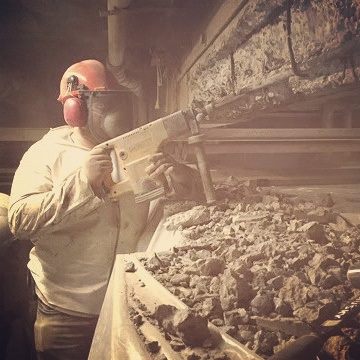
Our Concrete beam repair focuses on restoring strength and function of the concrete beam.
Les Services de Béton Universel Ltée works closely with building managers and engineers throughout Greater Montreal to repair structural concrete beams in active commercial and industrial buildings.
What Concrete Beams do
In commercial and industrial buildings, concrete beams are designed to carry significant loads over long spans. They form part of the main structural frame and are typically integrated with slabs, columns, and walls.
Reinforced Concrete beams are commonly used to support:
- Concrete slabs in multi-level buildings
- Roof systems in warehouses and industrial facilities
- Underground Concrete Parking Garage and Structural Concrete Slabs
- Areas supporting heavy equipment or vehicle traffic
In underground parking garages, concrete beams often support repeated vehicle loads while being exposed to moisture, temperature changes, and de-icing salts. In industrial facilities, concrete beams may carry vibration loads from equipment or concentrated loads from machinery bases.
According to the American Concrete Institute¹, reinforced concrete beams are engineered to work as part of a connected load path. Damage to one beam can place added stress on surrounding structural elements.
Common Reasons Concrete Beams Require Repair
Concrete beams may require repair for several reasons, including environmental exposure, aging materials, or changes in how a building is used. Over time, even well-designed beams can experience deterioration if conditions are demanding.
Typical causes include:
- Cracks forming along the length or depth of the concrete beam
- Concrete spalling that exposes reinforcing steel
- Corrosion of internal reinforcing steel
- Long-term exposure to moisture
- Repeated contact with de-icing salts in parking structures
- Increased loads from renovations, equipment upgrades, or changes in use
The International Concrete Repair Institute² notes that early evaluation and concrete repair can help limit the spread of damage, reduce concrete repair scope, and preserve the original structural capacity of the beam.
Concrete Use and Exposure in Commercial Structures
Concrete is one of the most widely used construction materials in the world. According to the Global Cement and Concrete Association, global concrete production reached approximately 14 billion cubic meters in 2020³, reflecting the scale of concrete use in commercial and industrial construction.
In Quebec, winter maintenance practices add another layer of exposure. Government data shows that nearly 1.5 million tonnes of road salt are applied each winter⁴ across the province. In underground concrete parking garages and loading areas, this salt is carried into buildings by vehicles and foot traffic, where it comes into repeated contact with reinforced concrete beams.
Over time, this combination of heavy use, moisture, and chloride exposure places stress on structural concrete elements, making inspection and concrete repair a normal part of building maintenance.
Environmental Exposure and Beam Deterioration
Freeze – thaw cycles
In cold climates, water can enter small cracks and pores in concrete beams. When temperatures drop, that water freezes and expands. Over time, repeated freezing and thawing gradually widens cracks and weakens the surrounding concrete.
Research from the National Research Council of Canada⁵ shows that repeated freeze – thaw cycles reduce concrete durability when moisture is not properly managed.
De-icing salts
In underground garages and loading areas, de-icing salts are a major source of chloride exposure. Chlorides can penetrate concrete and reach reinforcing steel embedded within the beam.
Once corrosion begins, the expansion of steel places internal pressure on the surrounding concrete. This often leads to cracking, spalling, and a gradual loss of bond between the concrete and reinforcement.
Canadian concrete standards published by CSA Group⁶ place limits on chloride exposure because corrosion-related expansion can compromise long-term structural performance.
How Concrete Beam Damage Is Evaluated
Before Concrete repairs begin, concrete beams are typically evaluated to determine the cause and extent of deterioration. This evaluation may include:
- Visual inspection for cracks, spalls, and staining
- Sounding tests to locate delaminated concrete
- Measurement of crack width and pattern
- Assessment of reinforcement exposure or corrosion
- Review of loading conditions and building use
Understanding why damage occurred helps ensure that repairs address the root cause, not just surface symptoms.
Les Services de Béton Universel Ltée regularly works alongside engineers to assess concrete beam conditions and determine appropriate repair strategies for commercial and industrial buildings.
Typical Concrete Beam Repair Methods
The repair approach depends on the condition of the beam and the cause of the damage. Repair methods are selected to restore strength while maintaining compatibility with the existing structure.
| Condition | Repair Focus |
|---|---|
| Surface deterioration | Removal of loose concrete and patch repair |
| Rebar corrosion | Cleaning, treatment, and re-encapsulation |
| Structural cracking | Crack repair and reinforcement |
| Load-related issues | Strengthening or section restoration |
During repairs, care is taken to ensure proper surface preparation, material compatibility, and curing conditions. Testing standards published by ASTM International⁷ are commonly used to verify bond strength and material performance after repairs.
Concrete Repair Versus Replacement
In many commercial and industrial buildings, repairing a concrete beam is preferred over full replacement. Replacement may require demolition, temporary shoring, and extended downtime for the building.
Repair allows the concrete beam to continue functioning while reducing disruption to operations. Structural rehabilitation is known as a standard approach for extending the service life of existing buildings.
When to Have Concrete Beams Evaluated
Concrete beams should be evaluated when any of the following are observed:
- Cracks that change in size or pattern over time
- Rust staining or exposed reinforcement
- Pieces of concrete breaking away from the beam
- Increased loads due to building modifications or equipment changes
Addressing issues early often reduces concrete repair scope and helps preserve the original structure.
In Quebec, structural concrete work must comply with provincial construction requirements overseen by the Régie du bâtiment du Québec⁸.
Key Takeaways
- Concrete beams support major loads in commercial and industrial buildings
- Environmental exposure and aging can affect beam performance
- Early repair helps limit structural risk and disruption
- Concrete Repair is often a practical alternative to replacement
Les Services de Béton Universel Ltée provides structural concrete beam repair across Montreal, Laval, and the South Shore, often as part of broader rehabilitation and maintenance programs.
Resources
¹ American Concrete Institute – Reinforced Concrete Beams
https://www.concrete.org/topicsinconcrete/topicdetail/reinforced%20concrete%20beams
² International Concrete Repair Institute – Guideline 310.1R
https://store.icri.org/item/3101r2008-english-pdf-guideline-surface-preparation-repair-deteriorated-concrete-resulting-reinforcing-steel-corrosion-342512
³ GCCA – Cement and concrete around the world (global figures)
https://gccassociation.org/concretefuture/cement-concrete-around-the-world/
⁴ Ministère de l’Environnement du Québec – Road salt use in Québec
https://www.environnement.gouv.qc.ca/eau/flrivlac/sels-dissous-en.htm
⁵ National Research Council of Canada – Freeze-Thaw Durability Research
https://nrc-publications.canada.ca/eng/view/object/?id=d51b5439-7ff0-4ae4-a714-69b50838136f
⁶ CSA Group – CSA A23.1/A23.2 Concrete Standards
https://www.csagroup.org/store/product/CSA%20A23.1%3A19-CSA%20A23.2%3A19/
⁷ ASTM – ASTM C881 (bonding concrete)
https://www.astm.org/standards/c881
⁸ RBQ – Building work / requirements (Quebec)
https://www.rbq.gouv.qc.ca/en/